Section I: Client Analysis & Context
a. Fundamental Analysis
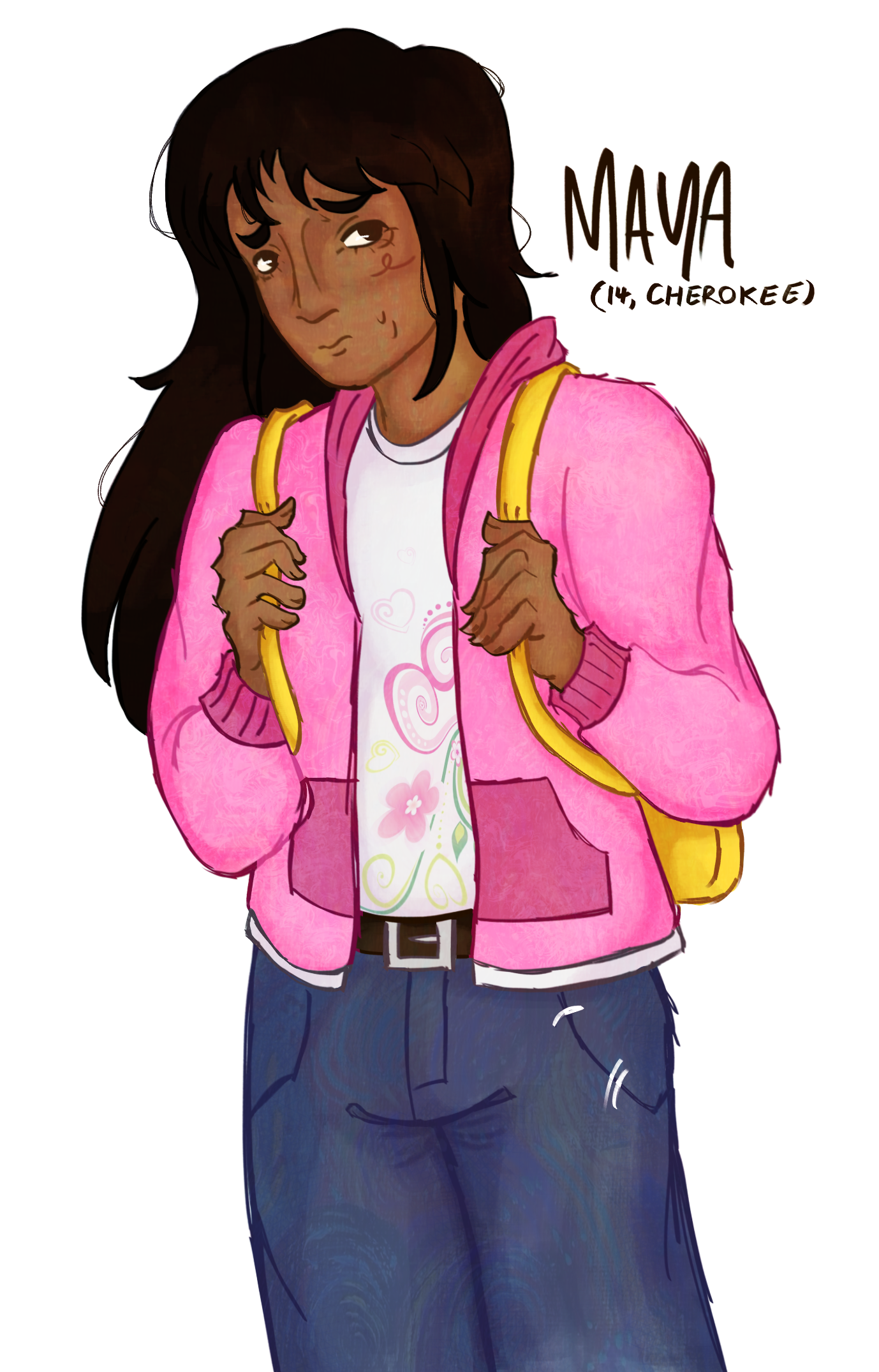
Several factors affect Maya's ability to manage her chronic illness. Maya's cultural and language barriers may prevent her from being able to access resources regarding management of her Type 1 diabetes. This can also impact her health literacy and understanding of her chronic illness. As a result, she may not properly take care of herself and may lead to adverse health effects such as hyperglycemia. Her inadherence to medication is likely due to a preference for or belief in alternative medicine, and may contribute to other adverse health effects. With the new stressor of managing a chronic illness 24/7, Maya is likely unused to the routine and may quickly experience burnout, leading to one issue of poor self-care/medical neglect. Because Maya was raised within Cherokee culture, there may have been an emphasis on traditional healing practises, alternative understandings of illnesses and health, and general historical knowledge that may make her reluctant to trust or adhere to Western medicine. She is newly diagnosed, so she may not even have an established routine to adhere to at all. Her age is also a factor; she is still developing emotionally and cognitively, and a desire to be like her peers may impact adherence to medication.
b. Health Care Resource Map
Three healthcare providers in this area that can help Maya are a pharmacist to provide her medicine, a registered dietitian to assist her with food management, and a primary care physician to have a full record of her health and be able to see what's going on through her history. A PCP is also good for check-ups and helping Maya assess what might be up so she can see specialists for it. Two community resources Maya can use are Indigenous-led food banks (as Indigenous peoples are often critically underserved in communities), to assist her with food she can eat. Kids Help Phone can help her greatly with talking through her stress and confusion surrounding having a chronic illness and would serve as an outlet for such.
c. Contextual Link
Maya's food insecurity can be linked to the more broader, historically linked and now systemic issue of Indigenous Peoples' rights in developed countries. Because Indigenous Peoples are more geographically isolated, had their land stolen, and face discrimination when receiving jobs or education, they unequally suffer extreme amounts of food insecurity and poverty. Maya's family moved out from an Indigenous reserve because isolation from more urban environment means fresh and healthy food is expensive, and a lack of cared-for infrastructure means that traditional harvesting is also inaccessible. However, they still face food insecurity but now with different causes: Maya's family is discriminated against, potentially ineligible for certain government benefits, and experiencing unfair wage gaps. Indigenous peoples, whether on reserves or not, face food insecurity incredibly hard.
Section II: The Care and Intervention Plan
d. Therapy Comparison
The main conventional therapy for Maya's Type 1 diabetes is insulin replacement therapy. This is usually done with either a pump or multiple syringe injections a day. Two benefits of this are that it is life-sustaining and it gives Maya the insulin her body cannot produce, and avoids long-term complications. The risk to this is its requirement for constant management may make Maya's stress worse, heightening her lack of adherence to medicine. A complementary therapy is the Cherokee traditional practise of Ama-Doha, or Going to Water. It is a healing, spiritual ritual involving the cleansing of illness. A ceremonial dip in water every morning is thought to cleanse the day of negative thoughts and washes away illness. While it probably can't wash away Type 1 diabetes, it can help Maya feel more connected to her culture and feel more confident about self-care. The only real risk could be the potential contamination of water, it's integral that Maya is careful about Ama-Doha, as it is usually performed in rivers, which in urban environments may be polluted in some areas.
e. Daily Wellness Menu
f. Recreational Activity
Maya could pick up gardening as a mindful activity. The goal would primarily be to ground herself and reduce stress that may be preventing her from taking proper care of herself, especially regarding a new diagnosis. Materials necessary would be simple gardening tools! Any specific notes would be for Maya to make sure not to overwork herself, as stress is bad for her chronic condition. Another safety note would be for her to make sure that any injuries she might sustain while gardening are effectively treated.
g. Communication Script
Here is my script for explaining T1D to Maya!!! Maya has came back to her primary care physician with her family after receiving a call about bloodwork she had done.
PRIMARY CARE PHYSICIAN: Hello, Maya, and Mr. Ahoka. I've reviewed the results of your recent bloodwork and tests. Before I tell you what the results are, I'd like to ask you if you recall why we had these tests done and what symptoms you were describing.
MAYA: I was experiencing a lot of thirst, I lost a lot of weight, and I felt really tired often. Did you figure out what's wrong with me?
PCP: I'm sorry to have to tell you this, but the bloodwork done shows that you have Type 1 diabetes. The symptoms you've been experiencing are hallmarks of this condition.
PCP: Specifically, your A1C levels--or blood sugar levels,--were quite high. Type 1 diabetes is an autoimmune condition, which means your immune system has mistakenly identified your insulin-producing cells, cells which turn sugar into energy, as invaders. It isn't something caused by lifestyle and it couldn't have been preventable.
MAYA'S DAD: (after a long pause to process this information. The primary care physician waits for Mr. Ahoka to speak first, silence is treated as respect and thoughtful in Indigenous cultures) Is there anything we can do to help this?
PCP: Absolutely. Type 1 diabetes is often treated with insulin replacement therapy, meaning Maya will have to take shots of insulin multiple times throughout the day to supply her body with it. While we have treatments like that to help provide her body with insulin, I am willing to work in tandem with any traditional healers to assist in spiritual balance during this time.
MAYA: Am I going to need to take shots forever? I don't understand how this happened.
PCP: I understand this may be a significant shock to you and your family. For now, our main goal is just to make sure you are safe. You aren't alone in this, and we can figure out a treatment plan that will work for you. Right now, Mr. Ahoka, I'd like to suggest a simple insulin plan. I will also be contacting a cultural liason to help me assist you and your family. Would that be okay?
MAYA'S DAD: Yes, that sounds fine. Is there any additional information we might need?
MAYA: I feel really stressed about this...
PCP: I'm going to give you a visual and written pamphlet on Type 1 diabetes, as well as my contact number and two community resources that can assist you with this. At this time, it's integral that Maya is supported by the people around her and can reach out to people about her stress. This pamphlet provides necessary information about diet, rest, stress, and what Type 1 diabetes entails. Maya--I want to reassure you that you are not alone in this. Many people every day have this condition and lead completely average lives. Please take the time to properly process this, especially with family.
MAYA: Thank you, I feel really calm about this now.
MAYA'S DAD: We'll be leaving now. Thank you, doctor.
Section III: Professional Readiness
h. Career Profile
One career for a healthcare provider that could help Maya is an endocrinologist. An endocrinologist specializes in hormones, glands, and the endocrine system. This puts their work in areas like the adrenals, thyroid, and more relevantly, the pancreas. They could assist Maya in developing agreeable treatment plans and inform her thoroughly on both why she has to adhere to her medication and how. The post-secondary education path is typically a university major in something like Biology or Biochemistry, or something generally with pre-med qualities. Now pass the MCAT and it's off to Medical School! Do your residency in Internal Medicine, potentially Pediatrics if you are going to work in pediatric endocrinology. Then a fellowship in Endocrinology, then receive your final certification by passing the Endocrinology, Diabetes, and Metabolism Exam. Obtain a license to practise as an endocrinologist and you're good to go!
i. Safety Documentation
A diabetic emergency occurs when a patient's blood sugar is too high or too low. This is characterised differently depending on which one, but for Maya, a diabetic emergency will look like excessive thirst, acetone-scented breath, dry skin, and blurred vision. You should supply her with any sugary drink at all--do not administer insulin yourself. Quickly assess the symptoms as they can progress into slurred speech, seizures, or loss of consciousness. Encourage them to drink water and call for help immediately if symptoms worsen. Give them something sugary every 15 minutes if you are unsure on which type of diabetic emergency they are having.
WHMIS symbols you may find in the workplace of an endocrinologist are the Biohazardous Infectious Materials, Health Hazard, and Corrosion symbols. You would find the Biohazardous WHMIS pictogram around biological material used for hormone testing, the Health Hazard symbol around reagents or actual chemicals used for testing as the Health Hazard symbol warns about effects such as carcinogens, and you would likely find the Corrosion symbol around acids and bases used for testing.
j. Skills Self-Assessment
3 Essential Skills necessary for this career are problem-solving skills, critical thinking, and dexterity. 3 work habits are an organizational mindset, ability to work under pressure, and effective time management.
My clear strengths that I can reasonably identify are critical thinking and problem-solving. I am easily able to analyze situations and data without much assistance and I am also able to ask for clarification when needed. I think the main habit I would need to work on is time management--I often procrastinate and tend to need reminders a lot to stay on track. I will work on this and grow by figuring out how to break large tasks into steps, figure out more constructive ways of viewing my work to prevent procrastination, and use a planner!! I think a planner would help me immensely. I hope to grow and learn effective time management!